Label Text
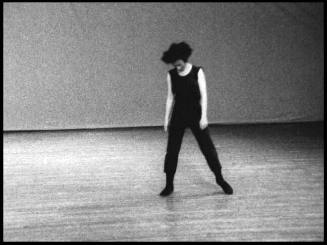
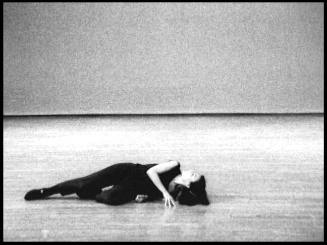
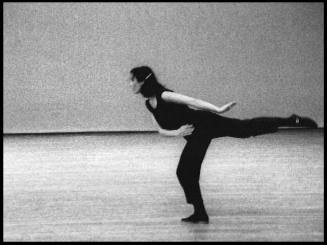
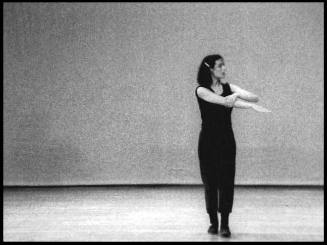
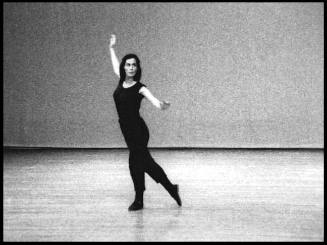
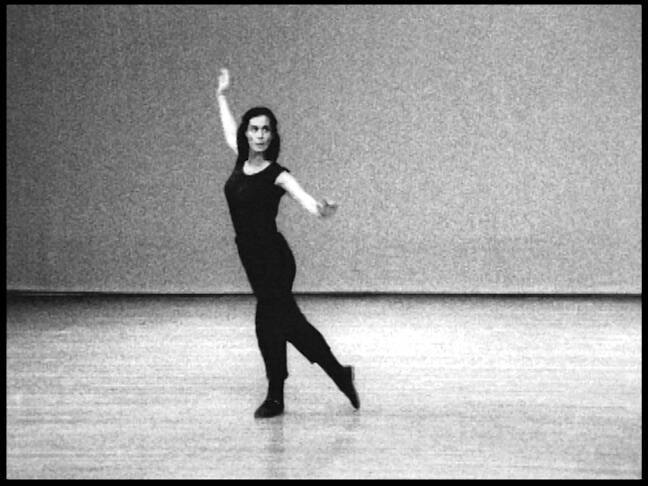
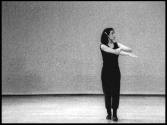
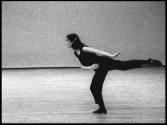
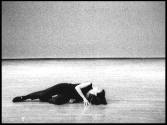
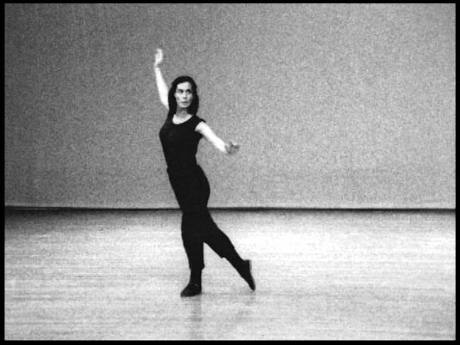
Yvonne Rainer's Trio A, emerged from years of exploration into what she termed “ordinary dance” and “neutral doing” — a practice built around everyday, “found” movements that flow without repetition or interruption. The piece carries no narrative intent; it is concerned purely with movement as its own subject, a quality reinforced by the performer's deliberate avoidance of eye contact with the audience. Rainer’s approach treats the body as a generator of motion rather than a vehicle for storytelling. She was a founding member of the Judson Dance Theater, a loose collective of dancers, artists, musicians, and filmmakers that emerged in New York City in the early 1960s, widely regarded as one of the most radical and influential movements in the history of American dance and performance art. Judson Dance Theater was a reaction against the dominant forms of both classical ballet and the expressive, emotion-driven modern dance. Its members questioned the most fundamental assumptions about what dance could be: who could perform it, what movements qualified as dance, and what relationship the performer should have with an audience. This documentation of Trio A is the first recorded moving-image version of the dance and was produced in 1978 by Sally Banes, a prominent American historian, critic, and scholar who was completing her doctorate on postmodern dance. Banes is best known for her writing, particularly her landmark book Terpsichore in Sneakers (1980), which documented and analyzed the experimental dance scene that emerged from Judson Dance Theater in the 1960s. The film is both a scholarly document and a preservation record of a key Judson work. Rainer performed the piece in Merce Cunningham’s studio, where it was recorded by cinematographer Robert Alexander on a 16mm film camera. It is a spare, silent, black-and-white documentation of Rainer performing her landmark dance in a studio setting. The austere style and single long-shot format is anti-theatrical by design, mirroring the ethos of Rainer’s style.
Exhibition HistoryTrio A and its variants have been performed at a multitude of institutions including theaters and museums since the 1960s. The film should be understood as a historical document and the most proximate moving image representation of the original dance that stands in for the original work when displayed in a gallery setting. Digital licenses for this uneditioned work are held by a number of museums, notably, the Museum of Modern Art and the Getty.
Published ReferencesBanes, Sally. Terpsichore in Sneakers (Boston: Houghton Mifflin, 1980)
Wood, Catherine. Yvonne Rainer: The Mind is a Muscle (Afterall, 2007)
Exhibition HistoryTrio A and its variants have been performed at a multitude of institutions including theaters and museums since the 1960s. The film should be understood as a historical document and the most proximate moving image representation of the original dance that stands in for the original work when displayed in a gallery setting. Digital licenses for this uneditioned work are held by a number of museums, notably, the Museum of Modern Art and the Getty.
Published ReferencesBanes, Sally. Terpsichore in Sneakers (Boston: Houghton Mifflin, 1980)
Wood, Catherine. Yvonne Rainer: The Mind is a Muscle (Afterall, 2007)
DimensionsRunning Time: 10 min. 21sec.
Accession Number 2026.23
Classificationstime based media
CopyrightVideo Data Bank
ProvenanceArtist (Video Data Bank); Des Moines Art Center [purchased from the previous, 2026]
Images (5)